Our method · field to kitchen
How we make it, the slow, honest way
From the farmer's field to your kitchen, every step is deliberately unhurried: seed bought direct, dried in the sun, crushed in a wooden chekku, settled, filtered and packed without plastic. Nothing is refined away.
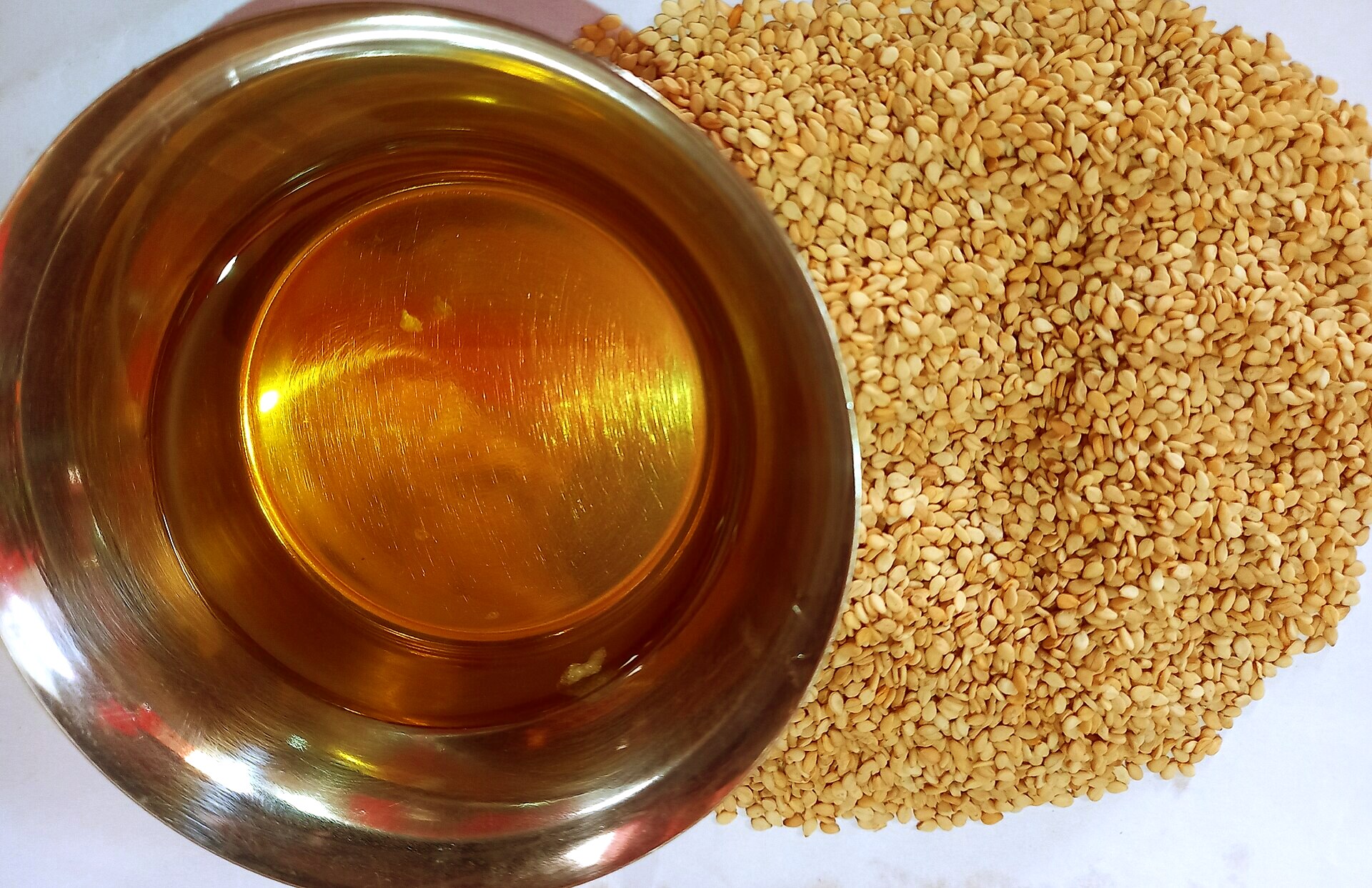 Golden, unrefined oil, just as the seed gives it
What “marachekku” means
A wooden press, one of the oldest in India
“Marachekku” simply means wooden press. At its heart sits the chekku (also called a ghani), a wooden mortar-and-pestle that slowly crushes the seed against the inside of the mortar until the oil runs free. Historically it was turned by bullocks walking a patient circle; today a slow motor does the same work at the same unhurried pace. It is one of the oldest oil-pressing methods in India.
The press itself is traditionally built from vagai (Albizia lebbeck, the East Indian walnut or siris), a hard, dense, durable native hardwood long favoured for press mortars and pestles. We like that the method and the material are both rooted in the same soil our seed comes from.
One thing we'd rather say up front: a chekku does create some friction heat as it crushes, so we call this slow, low-temperature pressing, never “heat-free”. We unpack that, along with smoke points and allergens, in our plain-talk notes below.
Step by step
Six steps, start to finish
Here is the whole journey, from the field where the seed is grown to the bag it leaves us in. No hidden stages, no chemistry the oil doesn't need.
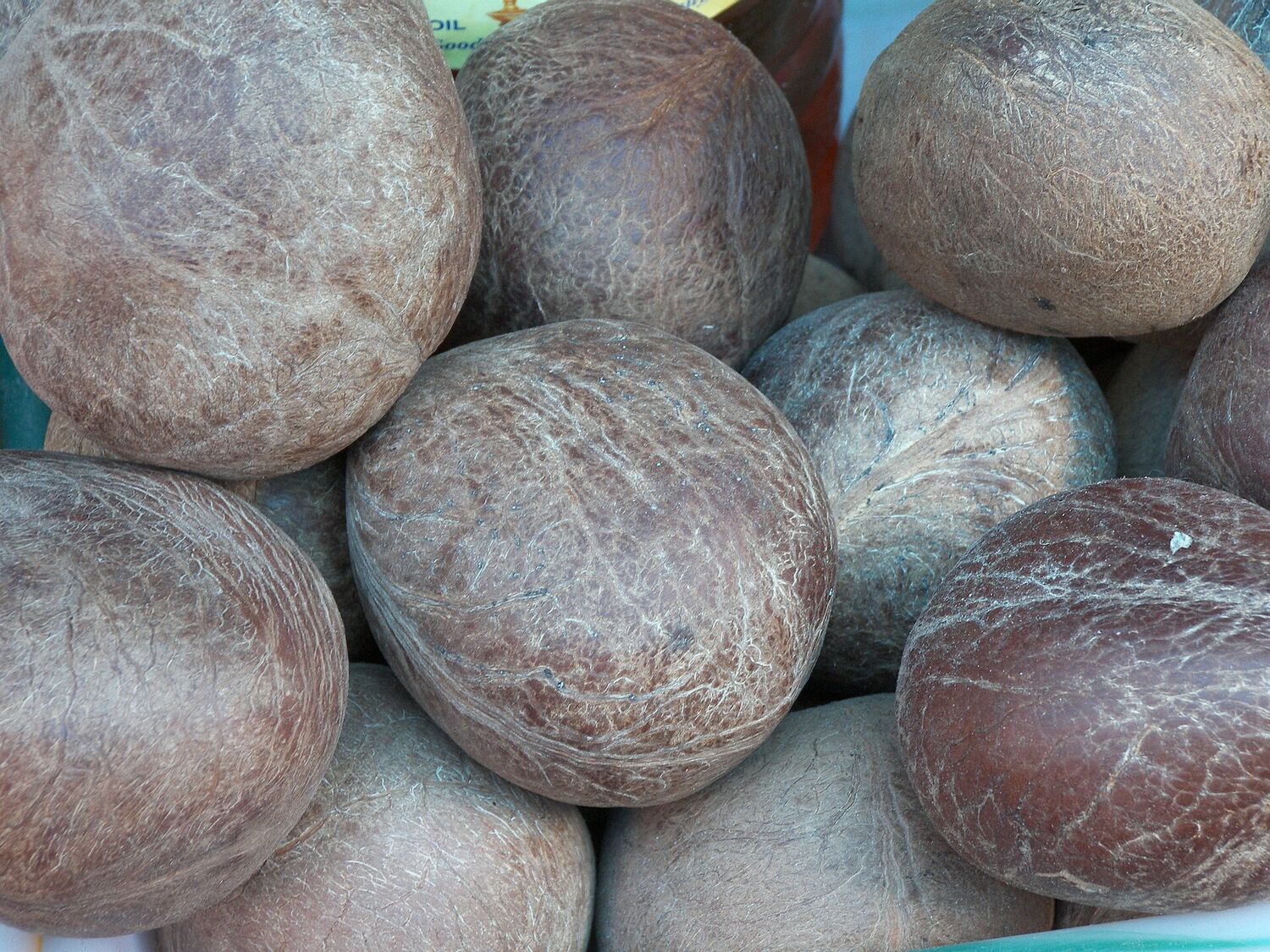 Sun-dried copra, before pressing

Sourced direct from farmers
We buy our coconut, groundnut and sesame straight from the growers, no long chain of middlemen in between. That means fresher seed, a clear trail back to the field it came from, and a fairer, steadier price reaching the people who actually farm it.

Solar-dried, not chemically dried
The seed is dried using the sun and protected solar drying, copra brought down to roughly 6% moisture, groundnut dried promptly after harvest, kept off bare soil and away from chemical drying agents, fumigants and smoke. Good, careful drying is also how we keep mould (and aflatoxin) at bay before pressing ever begins.

Slow wood-pressing
The dried seed goes into the wooden chekku, where it is crushed mechanically, the pestle grinding it against the mortar until the oil seeps out. There is no hexane and no chemical solvent extraction at any point. Just pressure, patience and the seed itself.

Settled & filtered
Fresh from the press, the oil is left to settle naturally so the heavier sediment drops out, then simply filtered. That's the whole of it, no refining, no bleaching, no deodorising. The oil keeps its own natural colour, aroma and flavour, exactly as the seed gave it.

Filled & plastic-free packed
The finished oil is filled, and orders go out in our reusable natural-fibre packaging rather than single-use plastic. It's the same thinking that runs through everything we make, useful, reusable, and made to replace plastic where we can.
Nothing wasted
Pressing leaves behind a firm cake of crushed seed, the punnakku. Rather than discard it, we pass it on as protein-rich cattle feed and as a natural fertiliser for the soil. It is kept dry once pressed, since damp oil-cake, groundnut cake especially, can grow mould and aflatoxin. So the whole seed has a purpose, and the loop closes back at the farm.
Beyond the oil
How we make the rest of it
The six steps above are the oil line, the heart of what we do. The same unhurried, low-interference thinking runs through everything else we make. Here, briefly and honestly, is how.

Stone-milled flours & batter
Clean, dry grain is ground slowly between stones in small, fresh batches, so the flour reaches you close to when it was milled rather than after months on a shelf. Our idli–dosa batter is ground from rice and urad dal in small batches too, with nothing added, just soaked grain, water and time.
See our flours & batter
Natural-fibre bags
Our carry bags are woven from natural fibre rather than plastic, banana fibre drawn from the pseudostem left after harvest, and cotton. Where we use bamboo, it is the woven, mechanically processed fibre, a true plant fibre, not chemically dissolved bamboo viscose. [Supplier and material details, Pon Vayal to confirm.]
See our natural-fibre bags
Punnakku (oil-cake)
The firm cake left in the press after the oil runs out is the punnakku. We don't discard it, it goes on as protein-rich cattle feed and as a natural fertiliser. It is kept dry from the moment it is pressed, since damp oil-cake (groundnut especially) can grow mould and aflatoxin.
See our oil-cake (punnakku)Plain talk
A few honest things, so you know what you're getting
We'd rather under-claim than oversell. Here are the caveats we think every wood-pressed oil should come with.
What you can count on
The short version
Read on
Go deeper into the method
If you'd like to see how all this lands in the bottle, our oils page lays out each variety, its smoke point and how to cook with it. Our sustainability page explains how we close the loop on seed, cake and packaging.
From our chekku to your kitchen
Now you know how it's made, shall we send some over?
Order our oils and flours, ask about custom pressing or a wholesale and export quote, or simply put a question to us about the method. We're happy to talk it through.