On this page
Open a bag of freshly stone-milled atta and the first thing you notice is the smell, warm, faintly sweet, unmistakably of wheat. That aroma is not a marketing trick; it is what a whole grain smells like when it has been ground gently and recently. This guide explains how a stone mill works, how it differs from the roller mills that make most packet flour, why fresh flour behaves the way it does, and how to keep it at its best, plus the basics of grinding idli–dosa batter at home.
How a stone mill actually works
A stone mill, a chakki in much of India, grinds grain between two circular stones. The lower stone stays still; the upper one turns slowly above it. Cleaned, dry grain is fed into a hole in the centre, works its way out towards the rim as the stone turns, and emerges from the edge as flour. It is an old, simple idea: crush the grain between stone surfaces until it is fine enough to bake or cook with.
Two things define the method. First, it is slow. The stones turn at a modest speed, so the grain is ground rather than shattered, and milling temperatures stay relatively gentle. Second, it grinds the whole grain together, the starchy endosperm, the oily germ and the fibrous bran are crushed in one pass and stay mixed in the flour, rather than being separated out.
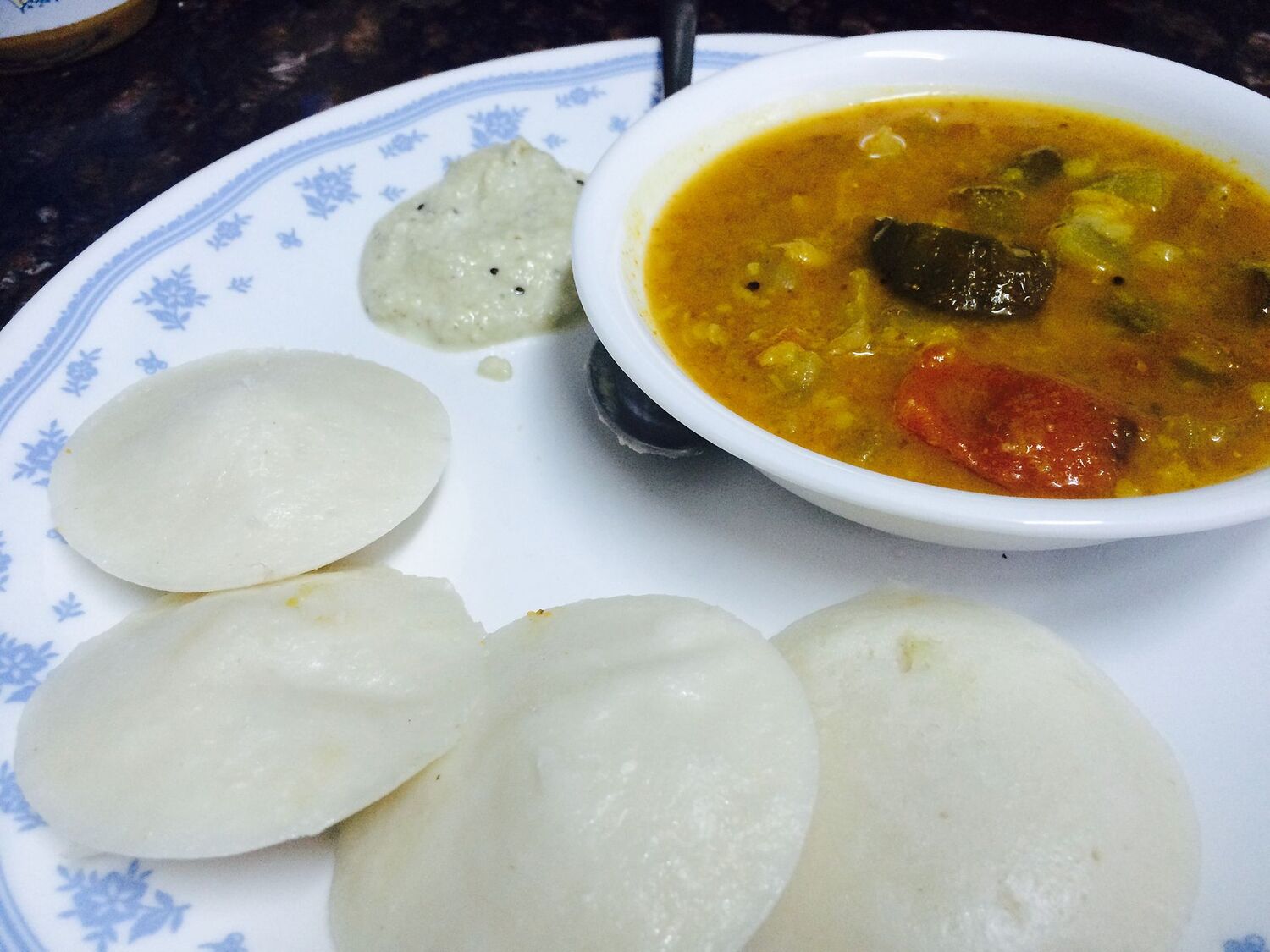 Idli, made from freshly ground batter
Stone milling vs roller milling
Most flour on a shop shelf is made on industrial roller mills. Steel rollers crack the grain open and a series of sieves separate the parts: the bran and the germ are sifted away, and what remains, the pale, starchy endosperm, is ground finer into the smooth white flour most of us grew up with. It is fast, consistent and shelf-stable, because removing the oily germ removes the part most likely to turn rancid.
A stone mill takes the opposite approach. Because the grain is crushed whole and not sieved apart, the bran and germ stay in the flour. That is the heart of the difference:
- Roller milling separates the grain, then recombines or discards the parts, fast, uniform, longer-keeping, paler.
- Stone milling grinds the whole grain together in one slow pass, coarser, fuller-flavoured, and best used fresh.
Neither is "good" or "bad" in the abstract; they are different tools. But if you want flour that still carries the bran and germ of the grain it came from, a stone mill is how you get there.
Why fresh flour smells and tastes different
The germ of a grain holds its natural oils. When a stone mill keeps the germ in the flour, it keeps those oils too, and that is what you smell when you open a fresh bag: the aroma of the whole grain, not just its starch. Roller-milled white flour has had that oily germ removed, which is exactly why it smells faint and keeps for a long time.
Freshness matters here in a way it simply does not for refined white flour. Because the germ's oils can slowly oxidise, whole-grain flour is at its best soon after milling and gradually loses that bright, wheaty character over time. The trade-off is the same honest one we make with our oils: keep more of the grain, and you get more flavour but a shorter, more careful shelf life.
In the kitchen, fresh stone-milled atta tends to feel slightly coarser to the touch than fine roller-milled flour, and it drinks up a little more water. Dough made with it can feel firmer at first and softens as it rests, so giving the dough a few minutes to relax before rolling makes for softer rotis.
Looking after fresh flour
Because stone-milled flour keeps its bran and germ, it deserves the same care as an unrefined oil. A few simple habits keep it fresh:
- Store it airtight, cool and dark, a sealed container in a cupboard away from the stove, not an open bag on the counter.
- In hot, humid months, keep atta in a sealed container in the fridge; the cold slows oxidation and helps keep pantry insects out.
- Buy quantities you will use within a few weeks rather than a large sack that sits open for months.
- If flour ever smells sharp, bitter or musty, do not use it, that is the germ's oils having turned, just as an oil can.
It is the same idea, in flour form, as our companion guide on how to store cold-pressed oils: keep light, heat and air away, and buy a size you will finish fresh.
Idli–dosa batter, in brief
Idli and dosa start from the same basic batter: rice and split black gram (urad dal), soaked, ground and fermented. The grinding is where freshness counts again, a stone wet-grinder works the soaked grains into a smooth batter without overheating them, which helps the fermentation that follows.
The broad shape of it, kept deliberately general because every kitchen and climate differs:
- Soak the rice and urad dal (and a little fenugreek, if you like) separately for a few hours.
- Grind them to a smooth batter, the urad dal light and airy, then mix and add a little salt.
- Ferment at room temperature until the batter rises and smells pleasantly sour, quicker in warm weather, slower when it is cold. A warm corner of the kitchen helps.
- Once risen, the same batter makes soft idli steamed, and crisp dosa spread thin on a hot pan.
We grind our idli–dosa batter from rice and urad dal in small batches and keep it cold once ground, with nothing added, so it reaches you ready to ferment in your own kitchen. You can read more about it on our flours & batter page.
A short FAQ
Is stone-milled flour the same as whole-wheat flour?
They overlap but are not the same word for the same thing. "Whole-wheat" describes what is in the flour (the whole grain, bran and germ included); "stone-milled" describes how it was ground (slowly, between stones). Stone-milled atta is typically a whole-grain flour, but the two terms answer different questions.
Why does fresh atta feel coarser than packet flour?
Because it keeps the bran and germ of the grain rather than sieving them out. That slightly coarser, fuller texture is the whole grain showing up in the flour, and it is normal.
How long does stone-milled flour keep?
Less long than refined white flour, because it holds the germ's natural oils. Stored airtight, cool and dark, or in the fridge in humid months, it is best used within a few weeks while it still smells fresh.
Can I use stone-milled atta exactly like packet atta?
Mostly yes, with one tweak: it tends to absorb a little more water, so add liquid gradually and let the dough rest a few minutes before rolling for softer results.